Maha Shivaratri in Mauritius: The Great Pilgrimage to Ganga Talao
Every year in February or March, hundreds of thousands of Hindu pilgrims dressed in white walk across Mauritius to the sacred lake of Ganga Talao. It is the biggest religious event on the island, and a profound spectacle of devotion, colour and community.
What it is
Maha Shivaratri, the Great Night of Shiva, honours the Hindu god Shiva. Pilgrims fast and pray, and many walk for days, often barefoot, from their villages to the lake in the mountains. Along the way, volunteers hand out food and drinks to the walkers.
The kanwars
Many groups carry beautifully decorated wooden structures called kanwars, covered in flowers, mirrors and bright colours. They are taken to the lake with chanting and music. The roads along the route are lined with stalls and volunteers.
Visiting during the festival
- Expect heavy traffic and crowds near Ganga Talao and the main routes.
- Dress modestly, and keep your voice low in sacred areas.
- Avoid driving there. Use organised transport if you want to attend.
- If you prefer a quiet visit, go on another day. See our Ganga Talao guide.
How the pilgrimage began
Grand Bassin became a place of Hindu pilgrimage in the late 19th century, when a priest is said to have dreamed that its waters were linked to the River Ganges. The lake was renamed Ganga Talao, the lake of the Ganges, and in 1972 water from the Ganges was poured into it, strengthening that link. Since then the pilgrimage has grown into the largest religious gathering on the island.
The days of the festival
- Preparation: devotees fast, pray and build their kanwars, colourful arches decorated with mirrors, flowers and pictures of Shiva.
- The walk: pilgrims walk from their villages to Ganga Talao, often over several days. Volunteers along the roads offer food, water and rest stops.
- At the lake: pilgrims collect holy water and make offerings.
- The night of Shiva: on the main night, devotees pray and keep vigil in temples across the island, pouring the holy water over the lingam.
The giant statues
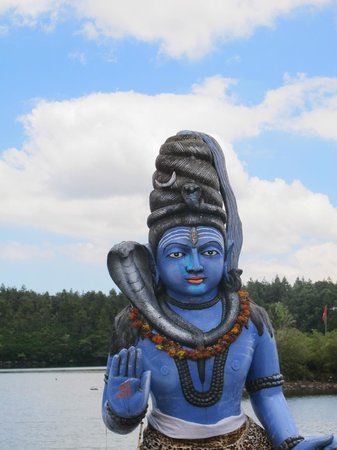
Near the entrance to Grand Bassin stand two huge statues, Mangal Mahadev (a form of Shiva) and the goddess Durga. At around 33 metres, the Shiva statue is one of the tallest in the world and is visible from far away.
Travel tips during Shivaratri
- Expect heavy traffic and closed roads around Grand Bassin in the days before the festival.
- Plan to visit the lake early in the morning or on another day if you only want to see the site.
- Dress modestly, remove your shoes in temples and ask before taking photos.
Book it with Plan Mauritius
These experiences can be booked through us, with transfers added if you need them:
- Grand Bassin (Ganga Talao)
- Special Events & Festivals in Mauritius – festival guidance for your dates
Frequently asked questions
When is Maha Shivaratri?
The next Maha Shivaratri in Mauritius is on Saturday 6 March 2027, a public holiday. Pilgrims start walking to Ganga Talao (Grand Bassin) several days before, so roads in the south are busy that week.
Can visitors watch?
Yes, with respect. Keep a polite distance, and do not disturb worshippers.
Is it a public holiday?
Yes.
How long do pilgrims walk?
Some walk for one or two days from their home villages, stopping at rest points set up by volunteers along the roads.
Can I visit Grand Bassin during Shivaratri?
Yes, but it is very crowded. Respect the rituals, dress modestly and expect slow traffic.
Want this planned around your dates?
Tell us when you are travelling and who is coming. We will build a day-by-day plan with hotels, transfers and activities, and send you a clear price.
Plan my tripTalk to our team